Saturday, March 31, 2012

George C. Emerson.

George C. Emerson.
Birth: 1837.
Death: 1862.
Burial: Candia Village Cemetery, Candia, Rockingham County, New Hampshire.

George C. Emerson, Private, Company B., New Hampshire Second, Infantry, Age 23, Born in Candia, Residence Candia, Enlisted May 15, 1861, mustered in June 1, 1861, was taken prisoner in the first battle, at Bull Run, July 21, 1861, was exchanged in season to start with the Regiment for the Penninsula, and was killed at Williamsburg, May 5, 1862.

Friday, March 30, 2012

Eather Enos Wilkerson.


Eathan Wilkerson.
or Eather E. Wilkerson.

Eather Enos Wilkerson.

Birth: Jan. 24, 1845.
Death: Oct. 9, 1930.

Eather Enos Wilkerson, Corporal, Company A 4th Ohio Cavalry Regiment
[aka Eathan or Eathen Wilkerson] Hardesty's 1886 Military History of Ohio, Warren County Edition, page 310;

"Eather Wilkerson corp. co. A, 4th O. V. C.; wounded at Selma, Ala."

Service Record from American Civil War Research Database by Historical Data Systems;

Eathen Wilkerson enlisted as a 20 year old Private on 27 Feb 1864, mustered into Co A 4th OVC on 27 Feb 1864, appointed Corporal on 2 Apr 1865, Mustered out with company at Nashville, Tennessee on 15 Jul 1865.

Pension Index Cards:

Eather Wilkerson filed for a pension on 18 Jul 1889 & on 20 Feb 1907 (Application #717677, Certificate #791440) for service in Co A 4th OVC, died 3 Oct 1930 at Morrow, Ohio, Ohio Death Certificate #63168 (1930) Eather Wilkerson retired white male, widower of Nancy Jane Wilkerson

born 24 Jan 1845 at Clarksville, Ohio to Wm. Wilkerson & Elizabeth Thompson died 3 Oct 1930 at Morrow, Warren County, Ohio, buried 6 Oct 1930 at Morrow.

"Eather Enos Wilkerson," obituary, The Western Star (Lebanon, Ohio), October 9, 1930; "Eather Enos Wilkerson, son of William and Elizabeth Wilkerson, was born near Spring Hill, Ohio, January 24th 1845 and departed this life October 3rd aged 85 years, 8 months and 9 days. On January 24th, 1867 he was united in marriage to Nancy Jane Runyan at Morrow, Ohio. He was a Veteran of the Civil War of 1861-65 and a Charter Member of Sul Stevens Post. Almost his entire life was spent in Morrow where he held many positions of trust, as an employee of the Pennsylvania R. R. Co.; Rural Mail Carrier for 17 years, also, Marshal and street Commissioner for many years.

He was very patriotic, always faithful to his duties, loyal to his friends, a kind and loving father, ever thoughtful for their comfort and welfare. He was the last member of a family of 12 children. His wife, daughter Rose and son Harry preceded him to the great Beyond. He leaves to mourn their loss, four daughters, Adah Loomis of Los Angeles, Cal., Cora Thornton of Grove City, Nora Dumford of Cincinnati, and Grace Couden of Morrow, nine grandchildren, five great grandchildren and other relatives and friends.
Burial: Morrow Cemetery, Morrow, Warren County, Ohio.

The Explosion Of The Steamer Sultana.

The following information comes from the ( Regimental History of the 11th., New York Cavalry ).  Afther I ran across this information I know I had to post it.  I have seen a lot of reports on this disaster, but this is the only one that makes it so real that you fill you are there.  This information well be in the form of a picture format, as it was to long to copy by hand then retype.  All pictures can be enlarged by pushing on any one of them, this will help you to read it better.


Veterinarians Of The Civil War Cavalry.

One important thing you need if your going to have a cavalry unit is horses.  Once you have horses you need to care for them you will need Farriers, handlers, stablers and of couse the veterinary-surgeon.  Here are a few things you may not know about the cavalry veterinarian.

Quartermasters will hold veterinary surgeon strictly responsible for the instructions issued to them, and in case of loss through carelessness or damage from neglect, the cost price of the instructments so lost or damaged will be charged to them.

Quartermaster responsible for medicines and dressings will take care that these articles are used for their legitimate purpose, and will hold the veterinary surgeon strictly accountable for their loss or damage through neglect, &c.

Regiment of cavalry (twelve companies or troops), 1. Veterinary.

The veterinary was allowed the pay as those of a Sergeant.

Each regiment shall have one veterinary surgeon, with the rank of a regimental sergeant-major, whose compensation shall be seventy-five dollars per month.
-----------------

Just about any one in a company could become a veterinary -Surgeon if he could show he had the skills.  Because of this it makes it hard to know who was a veterinarian.  One could be a Private, and do the duty of a veterinary -Surgeon and hold the rank of a Sergeant or Sergeant -Major, then be discharged as a Private.

Getting veterinary -Surgeons, was hard to do as there won't that many skilled horse-surgeons within the company ranks.  The cavalry would go through out the county looking for them.  One who was found was Mr. James J. Johnson, he went under contract with the Colonel of the fourth Iowa, Cavalry, but he was never paid and had to go to Congress and asked to be paid.

I know there are those of you who know that your ancestor was a veterinary -Surgeon, but can't proof it.  Then there are others trying to find out if it was so.  I will list as many as I can find.

1. Andrew Chalmers, Enlisted from Selby, as a Veterinary-surgeon, in the ninth Illinois Cavalry; transfrred Comppany K., September 20, 1861; discharged December 1, 1864.

Militaly Card; Name CHALMERS, ANDREW J. Rank Private, Company K., Unit 9 IL US CAVALRY,
Residence SELBY, BUREAU CO, Illinois, Age 24, Height 5' 7 3/4, Hair BLACK, Eyes GRAY, Complexion DARK, Occupation FARMER, Nativity OHIO, Joined When SEP 20, 1861, Joined Where PRINCETON, Illinois, Period 3 Years, Muster In OCT 26, 1861, Muster In Where CHICAGO, ILL., 
Remarks PROMOTED VET SURGEON TRANS BACK TO THIS CO DISCHARGED DEC 1, 1864.

Pennsylvania Cavalry Units.

1. First regiment, Jacob Wolf, Veterinary Surgeon, mustered August 13, 1861, for 3.years, Promoted from private Company I, May 1, 1863; mustered out with regiment, September 9, 1864.

2. Second regiment, Solomon Penrod, Veterinary Surgeon, mustered in August 18, 1864, for 3. years, Promoted from Saddler Sergeant, December 27, 1864; transferred to 1st Provisional Cavalry, June 17, 1865; Vet.

3. Third regiment, Holden Chester, Veterinary Surgeon, mustered in August 23, 1861, for 3. years, Promoted from private company L, February 20, 1864; mustered out with regiment, August 24, 1864.

4. Fourth regiment, James A. Vanhorn, Veterinary Surgeon, mustered in August 24, 1862, for 3. years, Promoted from private Company B, November 10, 1864; mustered out with regiment, July 1, 1865; Vet.

5. Fifth regiment, Robert M. Roseberry, Veterinary Surgeon, mustered in September 20, 1862, Promoted from Farrier company H, February 1, 1864; discharged by General Order, June 18, 1865.

6. seventh regiment, George F. Parry, Veterinary Surgeon, mustered in June 22, 1863, for 3. years, Not on muster-out roll.

7. eighth regiment, Wm. B. Werntz, Veterinary Surgeon, mustered in September 17, 1862, for 3. years, Promoted from private Company K, October 29, 1864; transferred to 161st regiment P. V., July 24, 1865; Vet.

8. ninth regiment, Chas. W. Sherman, Veterinary Surgeon, mustered in December 9, 1861, for 3. years, Promoted fromn private Company E, January 23, 1865; Mustered out with Regiment, July 18, 1865.

9. ninth regiment, D. L. Echternach, Veterinary Surgeon, mustered in December 9, 1861, for 3. years, Discharged on Surgeon's Certificate, November 25, 1863.

10 eleventh regiment, George Thomas, Veterinary Surgeon, mustered in August 19, 1861, for 3. years, Promoted from Farrier, Company B, May 4, 1863; mustered out with Regiment, August 13, 1865; Vet.

11. Thirteenth regiment, John Hatfield, Veterinary Surgeon, mustered in March 3, 1863. Discharged by special order, dated August 29, 1864.

12. fourteenth regiment, Joseph Miller, Veterinary Surgeon, mustered in November 23, 1862. Promoted from Private Company E, November 23,1862; discharged by General Order, May 31, 1865.

13. fifteenth regiment, J. B. M'Glumphey, Veterinary Surgeon, mustered in October 3, 1862. Promoted from Sergeant Company D, July 22, 1864; mustered out with Regiment. June 21, 1865.

14. sixteenth regiment, William B. Werntz, Veterinary Surgeon, mustered in September 17, 1861. Mustered out with regiment, August 11, 1865; Vet.

15. sixteenth regiment, Jacob Lemon, Veterinary Surgeon, mustered in September 18, 1862. Promoted from 1st Sergeant company F, January 1, 1865; discharged by General Order, June 15, 1865.

16. sixteenth regiment, Alex. De Armitt, Veterinary Surgeon September 11, 1862. Promoted from Farrier company I, November 20, 1862; died August 7, 1864.

17. seventeenth regiment, Samuel M. Drew, Veterinary Surgeon, mustered in June 4, 1863. Discharged August 7, to date January 16, 1865.

18. eighteenth regiment, Samuel Dodd, Veterinary Surgeon, mustered in December 7, 1862 Promoted from Sergeant Company G, March 3, 1863; discharged by General Order, July 10, 1865.

19. twentyeth regiment, Peter Henseler, Veterinary Surgeon, mustered in June 25, 1863. Promoted from Sergeant company H, November 1,1863; mustered out with regiment, January 6, 1864.

20. twenty-first regiment, Peter Gockley, Veterinary Surgeon, mustered in July 15, 1863. Promoted from private Company E, February 1, 1865; mustered out with Regiment, July 8, 1865.

21. twenty-second regiment, Zachariah B. Kent, Veterinary Surgeon. Pomoted to Veterinary Surgeon, May 4, 1865; mustered out with 3d Regiment Provisional Cavalry, October 31, 1865.
regiment

Iowa First Cavalry.

1. John R. Townsend, Henry County, Enlisted January 1, 1862, in Co. H., detailed foe extra duty at regimental  H. Q.  Promoted Veterinary-Surgeon July 2, 1863, under G. O. 110 of 1863,  War Dep., A. G. O., reorganizing the cavalry.  Returned to Co. H., cause not found, January 1, 1864.  Mustered out January 20, 1864, term expired.

2. William Mann, Fremont County, Enlisted October 2, 1861, in Co. A., appointed 2nd Sergeant at mustered in, re-enlisted as a Vet., December 12, 1863.  Promoted Veterinary-Surgeon, February 20, 1864.  Mustered out with Non-Commission staff, August 10, 1865, Atlanta, Ga.

3. Solomon Weaver, Oskaloosa or Marion County, Enlisted December 17, 1861, in Co. G., transfrred to Co. F., January 1, 1862.  Promoted Veterinary-Sergeant, 2nd, Batt., January 15, 1862.  Returned as Private to Co. F., July 1, 1862.

4. Levi Gans, Mt. Pleasant, Enlisted November 16, 1861, in Co. C.  Promoted Veterinary-Sergeant, 2nd, Batt., July 1, 1862.  Mustered out October 25, 1862, under G. O. 126 of 1862, War Dep., A. G. O.

5. John G. McBoom, Marshall County, Enlisted September 23, 1861, in Co. E, promoted Veterianary-Sergeant, 3rd., Batt., January 15, 1862.  Mustered out under G. O. 126 of 1862, War Dep., A. G. O.

Third Massachusetts Cavalry.

John McNaugt, born in Eastport Ma., 1844, moved to East Boston in 1853; attended the Adams Grammer School; and enlisted as a private in Co. E., Forty-Firat Massachusetts Infantry, July of 1862.  Promoted to Corporal, shortly after enlistment.  Discharged at Falls Church, Va., May 20, 1865, is a Veterinary Surgeon by profession.

Eleventh New York Cavalry.
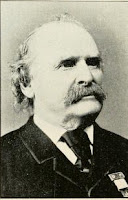


Enos Hunt Stevens.
 
1. Enos Hunt Stevens, Age 40, Enlisted January 15, 1862, at New York, discharged January 16, 1865, Veterinary-Surgeon.

2.  Fred'k Starkey, Lieutenant served as a Veterinary-Surgeon in the First United States Mounted Rifles, ( Reguiar Cavalry ), and fought in the Indian Wars, and prior to this service had been Veterinary -Surgeon with Prussian Cavalry.  Age 33, Enlisted May 17, 1862, at New York, Companies I., and C., 2nd, Lieutenant, died by suicide July 13, 1863.

Sixth New York Cavalry.

1. Thomas Kennon Jr., Co. A., Quartermaster, Sergeant, Veterinary-Surgeon, Mustered in September 12, 1861, no other records.

2. William McKee, Co. E., Mustered in October 3, 1861, Mustered out June 17, 1865, Farrier, Veterinary-Surgeon.

Ninth New York Cavalry.

1. James Baker, Enlisted November 20, 1861, at Albany.  Appointed Regimental Veterinary-Surgeon, April 28, 1863.  Wounded at Todd's Tavern, May 7, 1864.  Discharged for disability, April 29, 1865, Baltimore Maryland.

2. Orren D. Hadden, Age 43, Enlisted September 20, 1861, at Brocton.  Appointed Battalion Veterinary-Surgeon, November 1, 1861, mustered out September 29, 1862. at Washington D. C.

3. Rollin G. Wells, Age 44, Enlisted October 16, 1861, at Stafford, New York.  Appointed Battalion Veterinary-Surgeon, December 1, 1861, discharged February 14, 1862, at Washington D. C.

4. Charles A. Rugg, Age 24, Enlisted September 11, 1861, at Perrysburg, New York  Appointed Battalion Veterinary-Surgeon, December 5, 1861.  Discharged foe disability, February 20, 1862, at Washington D. C.

5. James Cudmore, Age 24, Enlisted November 21, 1861, at Albany, New York.  Appointed Battalion Veterinary-Surgeon, March 19, 1862.  Mustered out September 29, 1862, at Washington D. C.

Fifth New York Cavalry.  

1. John Young, Company B., Veterinary-Surgeon.
2. James J. Jelly, Company B., First Battalion, Veterinary-Sergeant.

First New York ( Lincoln ) Cavalry.

1. Ernest Rathman, Company E., Enlisted July 20, 1861, Mustered out December 27, 1862, Veterinary-Surgeon.

Fourth Ohio Cavalry.

Chester B. Lee, Company A., Age 31, Enlisted October 7, 1861, for 3, years, Promotrd to Veterinary-Sergeant, from Private, Co. I., October 7, 1861, to Veterinary-Surgeon, April 29, 1863, mustered out with regiment July 15, 1865.

Wednesday, March 28, 2012

Florance Lombard And His Family Lines.

Around seven years ago, I put up a post at Roots-Web, and then foregot about it, then last week I got a letter from a Mrs. Kikki Lombard, stating that Florance Lombard was a male and not a female as I had stated.  It seems this erorr happened a lot in some records he's listed as Male while others its Female.  Well I got interseted and asked a few questions and received a lot of information on him.  I thought that maybe some of my readers would be interest as will.  If he's a ancestor or a name of interest and you would like to ask a question or have information to give to Mrs. Kikki Lombard, she can be reached at the following She will be glad to hear from one and all. nlittlesp@aol.com
---------------------
This information will be in the form of questions and answers.
----------------------

Question: I was unable to find the post, so I can't say one way or another. Could you send me a link to the post?

Answer: I was just scrolling through the Lombard Message Board to see if there were any new postings of interest. I just thought it was interesting that anybody had noticed Florence. I had seen the 1880 census listed for Florence Lombard and also thought it was unusual for a female to be in the Army. I later found other census and military records that verify he was a male. I find him interesting becasue he was one of many children that my grandfather's parents had between them - three different batches, of which my grandfather was the youngest. His father died when he was about 4 or 5 and he was farmed out to relatives, then lived with his mother and stepfather in Wisconsin, and just before his mother gave birth to a fifth half sibling to join his full and other half siblings, he joined the army. I can't say that I blame him.

Question: Yes I remember the post now, I was looking for some military men and ran a cross the Fort Clark listings. I find you info interesting If I could find enough info I may do a page on him. Do you know the names of his mother and father?, it would help in my search.

Answer: Oh, Florence is very interesting. He was the son of Daniel Lombard, born sometime between 1810-1814, reportedly in Hampden County MA, but no birth record has been found. Florence's mother was Emily Alwilda Page, born about 1832 in Oswego County NY.

Daniel Lombard, a mason, joined the Army during the Mexican American War, but was discharged due to an injury (non combat) and was granted a pension. Probably soon after his discharge, he married Emily. I think he was married before. In the 1850 census for Port Washington, Washington County. Wisconsin, Daniel appears for the first time as head of household, age 40, with his wife Emily and an infant daughter Mary. At some point after that, they moved to Chicago, Ill where Daniel was a policeman. That is where Florence was born about 1855. The family then moved to Viroqua, Bad Ax County (later Vernon County) Wisconsin. The 1860 census shows Daniel him as head of household, a mason, with wife Emelia, and children Mary, Florence and Alta (Altha). Florence is again shown as a female. Also living in the household was Lawrence Page, Emily's brother, who later joined the Union Army in the Civil War and died of illness. Many sources show that Daniel Lombard died on Sept 15, 1860, presumably in Viroqua, but no source has been quoted and no cemetery record or obituary has been found. Apparently his widow had another baby in January 1861 and placed him with another family and returned to New York. In 1865, Florance, a male, was living in Albion, Oswego County, with his father's brother, Abial Lombard; Albert Lombard, who was maybe Abial's adopted son but was really Abial's daughter's son, born out of wedlock; and other children of Abial's daughter. Florence was 9 years old (1865).

Probably while in New York, Emily married Welcome Ballou Lombard (my great grandfather), son of Abial Lombard and nephew of Daniel Lombard, and a widower with six children. They all moved to Vernon County, Wisconsin by 1870. Welcome and Emily had at least 5 move children, maybe 6. Living in the household in 1870 were Welcome, Emily, three of Welcome's children from 1st marriage, three of their children together, and Florence, a male. One of his full sisters was living nearby with her husband and the other full sister.

So, according to military records I found on ancestry.com, Florence D. Lombard joined the Army in May 1874 at Fort Snelling, MN. and was discharged after his 3 year enlistment ended. Then he Apparently re enlisted right away for a 5 year period, but is shown as having deserted as of June 1882. It's not clear weather his unit was still in TX.

That was the last I found on Florence until just a couple of months ago. Over a period of years, I had searched for what had happened to Florence's sister, Altha Imogene, and her daughter, Edith. I found a few years ago that Altha died in Washington State, but could find no record of Edith. Eventually, I did, and was able to track her through the years and found a granddaughter still living in Washington. I contacted her and she sent me copies of letters of pictures and letters her grandmother had given her. One picture is of "Daniel Lombard" dated 1898. He was on a horse in a sort of town with a few kind of run down buildings.This was clearly not Florence's father Daniel, and I know of no other Daniel closely related to this group. One of the letters I received a copy of was from 1918 from a woman named Lucy in Rio Grande TX and was addressed to Florence's sister, Altha, and started with "Dear Sister". She says in the letter that Altha had asked how old the children were - the writer says Renie is 21, Daniel 19. She added that Rosa and her children Margaret and Raul live with her and that Mary's daughter Hortensia also lives with her. She asks Altha to send her the picture of "Mr. Craig" with two other men standing in front of a little meat market. The letter is signed "your loving sister, Lucy". Well, there was no Lucy in this family. So I took a look at 1910 and 1920 census records for Rio Grande TX , and strangely enough, I found in 1910, Eulogia V. de Craig (V for her maiden name Vasquez), a widow, with her children Rufina and Daniel, Rosa C. de Hernandez, and grandchildren Margarita and Raul, and Mary C. de Barvosa and Santos Barvosa and their daughter Ortensia. Interestingly, the birthplace of the father of Rufina, Daniel, Rosa and Mary was Illinois, as was Florence Lombard. In 1920, Lucy Craig, widow, was living with Daniel, Irene (Rufina or Renie), Margarita, Raul and Hortensia. In this census, the father of Daniel and Irene is shown as born in Wisconsin, which isn't too far off.

After a bit, I found that Daniel Craig enlisted in the Army in 1886 at Fort Snelling MN for 5 years. He was discharged in 1891 and re-enlisted the same year at Ft Sam Houston TX for 5 years. I believe he re enlisted in 1896.He re enlisted in 1902 at Ft McIntosh TX for 3 years. He was discharged in 1905. He reenlisted in 1905 in the Phillipines for 4 years, but died in 1906 at Ft Chickamauga GA. He is buried at Chattanooga TN. In the 1900 census, he is listed as being in the Phillipines, a wagon master, born March 1855 Illinois, father born Mass, Mother born NY. He is listed as single.

Lucy Craig appears in the 1900 census in Rio Grande Tx as Eulodia Vasquez, a widow, living with children Rosa born 1882, Mary born 1884, Rinie born 1892, and Daniel born 1894.

I was later able to find death records online for Rosa Hernandez, daughter of Daniel Craig and Eulogia Vasquez d. 1918, Irene Craig daughter of Daniel Craig and Eulogia Vasquez, died1929, Daniel Craig jr, son of Daniel Craig and Eulogia Vasquez, died in 1950. Eulogia Vasquez de Craig, or whatever her name really was, died in 1924, but her death certificate shows her as Eulogia de Cremar. Apparently she was previously married to or had other children with a man named William Cremar. Whether she was really ever married to Daniel Craig who must have been Florence Lombard is unknown. However every bit of information I can find suggests Florence Lombard morphed into Daniel Craig and fathered at least 4 children with Eulogia Vasquez. This is undoubtedly a story that I will never know the truth of. Somehow, Eulogia felt free to refer to Altha Imogene (Lombard) Cole as "sister" and talks about children of Daniel Craig and asks for a picture of Mr. Craig. Altha apparently had a picture of Mr. Craig which is labeled "Daniel Lombard 1898." Yes - this is an interesting family, without end.

Question: There is no question I had ask her If I could put up the information and sent her to my web site to look it over and she sent a answer back.

Answer: Looks interesting ! Sure - it's ok with me to submit the story, such as it is, of Florence Lombard/Daniel Craig. By the way, I did find two family trees on ancestry.com public member trees that show this person as Daniel Lombard Craig and his "wife" as Eustolia Krammer .That tree reflects on lt one of their children, Mary who married Santos Babosa Garza aka Santos G. Barbosa. Mary died in 1910, leaving her little girl, Hortensia to be raised by Eulogia/Lucy. Hortensia apparently married a man named Domingo Ramirez and had three children, two of whom have passed away and the others remain unnamed. I contacted the "owner" of one of those two trees who responded that she didn't know what I was talking about (a person in your tree !) The other person has not been "viewed" the public member tree for over a year which suggests to me the person is probably not a member of ancestry at this time, which means they will not get my contact message. But I'll keep trying.

Another note about this family - Florence had another uncle -DeWitt Clinton Page who married Welcome Lombard's sister Ruth and they had four children in the 1850s-early 1860s. DeWitt joined the Union Army in New York, left and then rejoined in Wisconsin toward the end of the war. Records indicate he committed suicide in a temporary fit of insanity (how do they know if it was temporary?) but I came across a post on some website for a different Wisconsin County that says later research indicates he was actually murdered in a case of mistaken identity, but they were attributing this story to the wrong DeWitt Page. In any case, another Page sibling, Caroline, and her husband Peter Mellen, became the guardians for the children.

By the way, my daughter wrote a paper on Cherokees in the Civil War while attending University of California San Diego, Warren College in the 1990s. She was a computer science major with a minor in linguistics, but she was admitted as a Warren Scholar, which was an honors program which required the student to fulfill certain requirements by graduation ,including writing a paper unrelated to their major, to graduate as a Warren Scholar - an honor - which gave the person an additional piece of paper. Her paper was in the running for a specific award for the "top" paper submitted that year, but it ended up coming in second. I don't know if you would be interested in reading it. If so, I'll ask her to send you a copy.She chose that topic because, on the other side of the family, we have Cherokee ancestors and there is a legend involving my great grandfather James Lafayette Fields that he tried to join the Confederate Army but was too young, so he rode with Quantrell's Raiders. There are no facts to back this story up, of course.

ok - back to the subject. I am Nikki (Lombard) Little, daughter of Raymond Lombard (1915-2009) and Mary Fields (1916-1997). My paternal grandfather was Samuel Edwin Lombard, son of Welcome Ballou Lombard and Emily Page. My email address is nlittlesp@aol.com.

Surgeons & Ass't Surgeons & Quartermasters Of New Jersey Regiments.

This is a list of Surgeons & Ass't Surgeons and Quartermasters from the different New Jersey Regiments.  Many of these names will have more information, and will be given upon request.
-----------------------

Ninth New Jersey, Volunteer Infantry.

Surgeons & Ass't Surgeon.
1. Frederick S. ( W.? ), Weller, Surgeon, Commission October 8, 1861.  His boat capsized in the Hatteras inlet and drown, January 15, 1862.

2. Lewis Braun, Elizabeth, Ass't Surgeon, Commission October 8, 1861, resigned March 20, 1862.

3. Addison W. Woodhull, formerly Ass't surgeon, 5th., New Jersey Volunteers, Commission and mustered as surgeon, February 6, 1862; wounded at Young's Cross-Road, July 27, 1862; also at Walthall, May6, 1864; discharged expiration of time of service, February 8, 1865.

4. Fidelio Gillette, Salem County, Co. M., Ass't surgeon, August 20, 1862; promoted Surgeon, February 8, 1865; mustered out July 31, 1865.

5. John M. Davies, New Orleans, Promoted and appointed Ass't surgeon, May 23, 1862; resigned June, 1865.

Fifteenth New Jersey Volunteer Infantry.

Surgeons & Ass't Surgeon.

1. Redford Sharp, Ass't Surgeon, Sixth N. J. V., August 25, 1861.  Commission Surgeon, July 19, 1862.  Mustered July 25, 1862.  Detail Div. Hdgr, December 6, 1864.  Died in Texas.

2. George R. Sullivan, Ass't Surgeon, commission July 11, 1862.  Mustered August 25, 1862.  Promoted Surgeon, 39th., N. J. V., September 25, 1864.  Residence Flemington N. J.

3. George Dearborn, Ass't Surgeon, commission August 20, 1862.  Mustered August 25, 1862.  Resigned  November 26, 1862.  Residence Washington D. C. (?)

4. Charles E. Hall, Ass't Surgeon, commission March 26, 1863.  Mustered and joined regiment, April 20, 1863.  Promoted Surgeon, Fortieth N. J. V.,  February 14, 1865.  Residence Freehold, N. J.

5. George D. Fitch, Ass't Surgeon, commission March 14, 1865, mustered March 22, 1865.  Trans. to Second Batt. June 21, 1865.  Residence Philadelphia.

First New Jersey Cavalry. 

Surgeons & Ass't Surgeon

1. William W. L. Phillips, Surgeon.
2. William S. Willes, Ass't Surgeon.
3. Ferdinand V. Dayton, Ass't. Surgeon.
4. John W. Blackfan, Ass't. Surgeon.
5. Samuel Powell, Ass't. Surgeon.
8. Samuel Jones, Hospital Stewd, Ass't Surgeon.
9. Stephen W. Van Duyn, Ass't. Surgeon.
First Batt.
1. Smith Wright, Farrier, Co. L., Vet., Surgeon.
Second Batt.
1. Richard Wilson, Vet, Surgeon, Co. C., Vet., Surgeon.

Ninth New Jerset Infantry.

Quartermasters.

1. John Bamford. Quartermaster-Sergeant, appointed October 8, 1861; discharged and commissioned 2nd., Lieutenant, 3rd., New Jersey Cavalry.

2. Oscar Van Bergen, appointed Quartermaster-Sergeant, January 1, 1864, received a commission as 2nd., Lieutenant, Co. E., May 5, 1864, when the regiment was at Yorktown, preparing for active service; the commission was veluntarily returned July 27, 1864, and former duty resumed.

3. Samuel Keys, Burlington, Quartermaster, commissioned October 8, 1861, discharged at expiration of time of service, October 26, 1864.

4. John A. McDougall, Co. M., promoted 2nd., Lieutenant Co. M., May 16, 1862; promted 1st., Lieutenant and detached A. A. Quartermaster June 18, 1862; discharged February 18, 1865.

5. Richard J. Berdan, Co. E., promoted and transferred 2nd., Lieutenant Co. C., September 9, 1864; transferred back to Co. E., September 23, 1864; promoted 1st., Lieutenant and appointed regimental Quartermaster, March 5, 1865.

Second New Jersey Infantry Co. L.

Quartermasters.

1. Addison Ely Jr., Quartermaster-Sergeant, Residence Rutheafor.

Fifteenth New Jersey Infantry.

Quartermasters.

1. Lowe Emerson, Quartermaster, Private, Co. C., 15th., N. J. V., commissioned August 15, 1862; Residence Cineinnatt Ohio.

2. Floyed F. Williams, Quartermaster-Sergeant, Enlisted Sergeant Co. K., August 2, 1862.  Quartermaster-Sergeant August28, 1862.  Private Co. K., April 14, 1863, commissioned 2nd., Lieutenant Co. D., September 10, 1864.  Mustered September 28, 1864.  Wounded October 9, 1864; discharged for dis.  December 17, 1864.  Residence Beemeaville.

3. Walter Johnson, Quartermaster, enlisted Sergeant Co. I., July 25, 1864., Quartermaster-Sergeant, April 28, 1863.

First New Jersey Cavalry.
Field & Staff.

Quartermasters.

1. Benjamin B. Halsted, Quartermaster.
2. Allen Dale, commissioned Sergeant, Quartermaster.
3. Edwin R. Blaker, 1st., Lieutenant, Co. E., Quartermaster.
4. William W. James, Quartermaster.
5. Charles P. Thompson, commissioned Sergeant, Quartermaster-Sergeant, Quartermaster.

Company Quartermasters

Company A.

1. Davod J. Walton, Corporal, Quartermaster-Sergeant.
2. John H. Forrons, Private, Quartermaster.

Company C.

1. Culver Marshall, Private, Co. F., Quartermaster.

Company D.

1. Charles P. Thompson, Private, Corporal, commissioned Sergeant, Regimental Quartermaster-Sergeant. 
2. Thomas Decourcey, Private, Co. A., Quartermaster-Sergeant, Private, Co. E.

Company E. 

1. John L. McFarland, Quartermaster-Sergeant.
2. Alfred R. Vail, Private, Corporal, Quartermaster.

Company F.

1. Jonathan Goble, Quartermaster, commissioned 2nd., Batt.

Company G.

1. Edward F. Wenner, Private, Co. L., Corporal, Quartermaster, Sergeant Major.
2.  John Skillman, Quartermaster, dead.

Company H.

1. Henry S. Stull, Quartermaster-Sergeant, Co. I., 2nd., Lieutenant.
2. Franklin Hamell, Sergeant, Quartermaster-Sergeant 3rd., Batt.

Company I.

1. Richard Darmstadt, Quartermaster-Sergeant Co. G., 2nd., Lieytenant.
2. Napolen B. Adams, Sergeant, Quartermaster, discharged.

Company K.

1. David Smith, Corporal, Sergeant, Quartermaster-Sergeant.
2. Robert J. Seeley, Private, Co. I., Quartermaster-Sergeant.

Company L.

1. John J. Bray, Private, Quartermaster-Sergeant, dead.

Company M.

1. James M. Tillman, Private, Corporal, Sergeant, Quartermaster-Sergeant.

Sunday, March 25, 2012

Richard A. Walker-New Hampshire.


Richard A. Walker.
Co. E.


Richard A walker, Private, Born Hopkinton, and lives there, Enlisted in the New Hampshire Second Infantry, Company E. at the age of 21, Enlisted from Hopkinton, on April 18, 1861, for 3 months, was not mustered in.  Re-enlisted May 21, 1861, for 3 years, was mustered in on June 3, 1861.  Was wounded at Williamsburg, Va., and died of his wounds on July 8 or 20, 1862.  His venerable mother Eliza a. Walker, now 77 years, living in Greeland N. H., writes: "He was my only son, and the best boy that ever blest a mother.  When he died, his father went to Fortress Monroe and brought his body home.  The journey and his grief were too much.  He was never well after that, an invalid, thirty years."

Ten Confederates Murdered.

HORRIBLE FEDERAL OUTRAGE-TEN CONFEDERATE MURDERED-THE FULL PARTICULARS OF THE SCENE.

[From the Palmyra (Missouri) Courier.]

Saturday last, the 18th instant, witnessed the performance of a tragedy in this once quiet and beautiful city of Palmyra, which, in ordinary and peaceful times, would have created a profound sensation throughout the entire country, but which now scarcely produces a distinct ripple upon the surface of our turbulent social tide.

It will be remembered by our readers that on the occasion of Porter's descent upon Palmyra, he captured, among other persons, an old highly respected resident of this city, by name Andrew Allsman. This person formerly belonged to the Third Missouri Cavalry, though too old to endure all the hardships of very active duty. He was, therefore, detailed as a kind of special or extra provost-marshal's guard or cicerone, making himself generally useful in a variety of ways to the military of the place. Being an old resident, and widely acquainted with the people of the place and vicinity, he was frequently called upon for information touching the loyalty of men, which he always gave to the extent of his ability, though acting, we believe, in all such cases with great candor, and actuated solely by a conscientious desire to discharge his whole duty to his Government. His knowledge of the surrounding country was the reason of his being frequently called upon to act as a guide to scouting parties sent out to arrest disloyal persons.

So efficiently and successfully did he act in these various capacities, that he won the bitter hatred of all the rebels in this city and vicinity, and they only waited the coming of a favorable opportunity to gratify their desire for revenge. The opportunity came at last, when Porter took Palmyra. That the villains, with Porter's assent, satiated their thirst for his blood by the deliberate and predetermined murder of their helpless victim no truly man doubts. When they killed him, or how, or where, are items of the act not yet revealed to the public. Whether he was stabbed at midnight by the dagger of the assassin, or shot at midday by the rifle of the guerilla; whether he was hung and his body hidden beneath the scanty soil of some oaken thicket, or left as food for hogs to fatten upon, or whether, like the ill-fated Wheat, his throat was severed from ear to ear, and his body sunk beneath the wave, we know not. But that he was foully, causelessly murdered it is useless to attempt to deny.

When General McNeil returned to Palmyra, after that event, and ascertained the circumstances under which Allsman had been abducted, he caused to be issued, after due deliberation, the following notice:

"PALMYRA, MO., October 8, 1862.

"JOSEPH C. PORTER:

"SIR: Andrew Allsman, an aged citizen of Palmyra, and a non-combatant, having been carried from his by a band of persons unlawfully arrayed against the peace and good order of the State of Missouri, and which band was under your control, this is to notify you that unless said Andrew Allsman is returned, unharmed, to his family within ten days from date, ten men, who have belonged to your band, and unlawfully sworn by you to carry arms against the Government of the United States, and who are now in custody, will be shot as a meet reward for their crimes, among which is the illegal restraining of said Allsman of his liberty, and, if not returned, presumptively aiding in his murder.

"Your prompt attention to this will save much suffering.

"Yours, &c.,

"W. R. STRACHAN,

"Provost-Marshal-General, District of Northern Missouri.

"Per order of brigadier-general commanding McNeil's column."

A written duplicate of this notice he caused to be placed in the hands of the wife of Joseph C. Porter, at her residence in Lewis County, who it was well known was in frequent communication with her husband. The notice was published widely, and as Porter was in Northern Missouri during the whole of the ten days subsequent to the date of his notice, it is impossible that, with all his varied channels of information, he remained unapprised of General McNeil's determination in the premises.

Many rebels believed the whole thing was simply intended as a scare intended as a scare, declaring that McNeil did not dare [?] to carry out the threat. The ten days elapsed, and no tidings came of the murdered Allsman. It is not our intention to dwell at length upon the details of this transaction. The tenth day expired with last Friday. On the day ten rebel prisoners, already in custody, were selected to pay with their lives the penalty demanded. The names of the men so selected were as follows: Willis Baker, County; Thomas Humston, Lewis County; Morgan Bixler, Lewis County; Herbert Hudson, Ralls County; John M. Wade, Ralls County; Marion Lair, Ralls County; Captain Thomas A. Sidner, Monroe County; Eleazer Lake, Scotland County, and Hiram Smith, Knox County. These parties were informed on Friday evening that unless Mr. Allsman was returned to his family by 1 o'clock on the following day, they would all be shot at that hour. Most of them received the announcement with composure or indifference. The Rev. James S. Green, of this city, remained with them during that night, as their spiritual adviser, endeavoring to prepare them for their sudden entrance into the presence of their Maker.

A little after 11 a. m. the next day, there Government wagons drove to the jail; one contained four and each of the others three rough board coffins. The condemned men were conducted from the prison and seated in the wagons, one upon each coffin. A sufficient guard of soldiers accompanied them, and the cavalcade started for the fatal grounds. Proceeding east to Main street, the sortege turned and moved slowly southward as far as Malone's livery stable; thence turning east, it entered the Hannibal road, pursuing it nearly to the residence of Colonel James Culbertson; there down the fences, they turned northward, entering the fair grounds (half a mile east of the town), on the west side, and, driving within the circular amphitheatrical ring, paused for the final consummation of the scene.

The ten coffins were removed from the wagons and placed in a row 6 or 8 feet apart, forming a line north and south, about 15 paces east of the central pagoda or music stand, in the center of the ring. Each coffin was placed upon the ground, with its foot west and head east. Thirty soldiers of the Second Missouri State Militia were drawn up in a single line, extending north and south, facing the row of coffins. This line of executioners ran immediately at the east base of the pagoda, leaving a space between them and the coffins of 12 or 13 paces. Reserve were drawn up in line upon either bank [flank] of these executioners.

The arrangements completed, the doomed men knelt upon the grass between their coffins and the soldiers, white the Rev. R. M. Rhodes, offered up a prayer. At the conclusion of this, each prisoner took his seat upon the foot of his coffin, facing the muskets which in a few moments were to launch them into eternity. They were nearly all firm and undaunted, two of three only showing signs of trepidation.

The most noted of the ten was Captain Thomas A. Sidner, of Monroe County, whose capture at Shelbyville, in the disguise of a woman, we related several weeks since. He was now elegantly attired in a suit of black broadcloth, with a white vest. A luxurious growth of beautiful hair rolled down upon his shoulders, which, with his fine personal appearance, could not but bring to mind the handsome but vicious Absalom. There was nothing especially worthy of note in the appearance of the others. One of them, Willis Baker, of Lewis County, was prove to be the man who last year shot and killed Mr. Ezekiel Pratt, his Union neighbor, near Williamstown, in that county. All the others were rebels of lesser note, the particulars of whose crimes we are not familiar with.

A few minutes after 1 o'clock, Colonel Strachan, provost-marshal-general, and Reverend Rhodes shook hands will the prisoners, two of them accepting bandages for their eyes. All the rest refused. A hundred spectators had gathered around the amphitheater to witness the impressive scene. The stillness of death pervaded the place. The officer in command now stepped forward, and gave the word of command. "Ready, and fire." The discharges, however, were not made simultaneously, probably through want of a perfect previous understanding of the orders and of the time at which to fire. Two of the rebels fell backward upon their coffins and died instantly. Captain Sidner sprang forward and fell with his toward the soldiers, his face upward, his hands clasped upon his breast and left leg drawn half way up. He did not move again, but died immediately. He had requested the soldiers to aim at his heart, and they obeyed but too implicitly. The other seven were not killed outright, so the reserves were called in, who dispatched them with their revolvers.

Friday, March 23, 2012

William Woods Averell.

                                        
William Woods Averell.

Birth: Nov. 5, 1832.
Death: Feb. 3, 1900.

Civil War Union Brigadier General. Born in Cameron, Steuben County, New York, he graduated from the United States Military Academy at West Point, New York in 1855, placing 26th in his class. He became a 2nd Lieutenant, was assigned to the United States Army Mounted Rifles, and served in the Indian Wars on the Western frontier. He was severely wounded in a fight with Navajo in 1859. When the Civil War began, he became a 1st Lieutenant with the Mounted Riflemen and was placed on staff duty in Washington, D.C. In August, 1861, he was appointed as Colonel of the 3rd Pennsylvania Cavalry and soon became a Brigadier General. During 1863, he initiated several cavalry raids in Western Virginia. His cavalry raided Confederate General James Longstreet's supply base on the Virginia and Tennessee Railroad on December 16, 1863. He was then placed in command of the 2nd Cavalry Division and was wounded near Wytheville, Virginia.
He resigned after the war and was appointed as Consul General of the United States in the British provinces of North America from 1866 to 1869. In 1869, he became president of a manufacturing company and an industrial inventor. He discovered a process for the manufacture of steel directly from ore in one operation in 1870. He invented the American Asphalt Pavement in 1879 and had patents for several insulating conduits for wires and conductors. He also invented a machine for laying electric conductors underground. He died in Bath, New York in 1900 when he was 67 years old.
Burial: Grove Cemetery, Bath, Steuben County, New York.

Felix Shumate.

Felix Shumate was born in Spencer County, Kentucky, and removed with his parents to Boone County, Indiana, in the year of 1847, where he spent the remainder of his life.  On the first call for troops by President Lincoln, Shumate enlisted as a Private in Company I., Tenth Indiana Infantry for three months service, participated in the battle of Rich Mountain, West Virginia, and returned home August 1, 1861, at the expiration of his term of service.  He immediately assisted Captain Perkins in recruiting his company for the three years service and was made First Lieutenant succeeding to the captaincy of the company after the death of Captain Perkins.  He was present at every battle and skirmish in which the regiment was engaged, being wounded in the battle of Mill Springs during the siege of Corinth and Chickamauga.

After the expiration of his three years term of service, he return to Lebanon and engaged in business.  He was the originator of many public enterprises and always at the head of every movement for the benefit of the people.  He served as Postmaster at Lebanon, under Harrison Administration.  He died at Lebanon, Deember 18, 1895.

Side Notes.  Corporal, enlisted April 23, 1861, Mustered out August 6, 1861, re-enlisted.  First Liuetenant, enlisted September 2, 1861, discharged September 18, 1864, wounded at Corinth Miss., promoted Captain November 1863.  Wounded at the battle Corinth Mississippi, by being run over by a cavalryman, was seriously hurt.

Thursday, March 22, 2012

Cyrus J. Burnett

Cyrus J. Burnett, Private, 124th., Pennsylvania Infantry, Company F., Mustered in August 11, 1862, Mustered out with company May 16, 1863.  This was a nine month service.  I would be most interested if any one has more information on him.

Wednesday, March 21, 2012

Slave Owners & Slaves of South Carolina.

This is a list of slave owners who had claims against the State of South Carolina, for the impressment of their slaves into public service.  There are no last names for the slaves just the first.  There are 261, slaves owners named but some are repeated as they had more then one of their salves who were impressed.  I will not list all 261, as you have to go back and forth in the records and would just taken to long.  If you don't see a slave owner here I will be glad to do a look up. 
-----------------------
Note for the author. Report of the Auditor of South Carolina, ( Civil War Slaves. )
------------------------

Slave Owner--District--Slave--Impressment--Death--Value--Allowed.

1. William Ashley--Barnwell--Isaac--Nov. 16, 1863--Dec. 12, 1863--$2,000--$,2000.

2. Thomas Adams--Chester--Lee--Sept. 14, 1863--Dec. 12, 1863--$1,900--$1,900.

3.  R. F. Atwood--Newberry--Travis--Sept. 14, 1863--Nov. 3, 1863--$1,400--$1,400.

4. William Aiken--Chesterfield--Pino--Oct. 16, 1863--Dec. 10, 1863--$1,800--$1,800.

5. William Aiken--Chesterfield--William--Oct. 16, 1863--Jan. 11, 1863--$1,700.--$1,700.

6. William Aiken--Chesterfield--Simon--Oct. 16, 1863--------$1,800--$1,800.

7. Robert Adger--Anderson--Douglas--Sept. 14, 1863--Dec. 26, 1863--$1,400--$1,499.

8. T. R. Asbill--Edgefield--Philip--Nov. 16, 1863--Jan. 31, 1864--$2,200--$2,200.

9. William Ashley--Barnwell--Alick--Nov. 16, 1863--Jan. 19, 1864--$2,000--$2,000.

10. David Butler--Edgefield--Henry--Nov. 16, 1863----No proof of Impersment.

11. D. W. Brown--Landcaster--Adam--Sept. 21, 1863--Oct. 22, 1863--$3,500--$3,500.

12. D. W. Brown--Landcaster--Ned--Sept. 21, 1863--Oct. 22, 1863--$4,000--$4,000.

13. Robert P. Buchanaan--Abbeville--Ephraim--Sept. 14, 1863--Oct. 12, 1863--No proof.

14. Rev. S. Bouknight--Edgefield--Allen--Dec. 16, 1862--Feb. 14, 1863--$2,000--$2,000.

15. S. B. Brooks--Abbeville--Charles--Sept. 16, 1863--Dec. 10, 1863--$1,000--$1,000.

16. Henry Burton--Newberry--Johnson--Sept. 16, 1862--Oct. 19, 1862--$1,400.

17. James C. Burch--Chesterfield--Ellis--Oct. 16, 1853--Jan. 9, 1864--$1,200--$1,200.

18. Mrs. T. H. Beekhan--Chester--Adam--Sept. 22, 1853--Dec. 10, 1863--$1,800--$1,800.

19. G. W. Bush--Barnwell--Henry--Nov. 16, 1853--Dec. 15, 1863--$2,000--$2,000.

20. Mrs. D. A. Cromer--Abbeville--Jack--Sept. 14, 1853--Nov. 4, 1863--$1,700--$1,700.

21. William Caldwell--Chester--John--Sept 21, 1853--Nov. 28, 1863--$1,800--$1,800.

Tuesday, March 20, 2012

William H. Hill.

"Major" Hill, as the boys called him, was born in Williamson County, Tennessee, in 1837.  He enlisted in Company A., "Hickory Guards," as it was termed before it became a part of the Twentieth Tennessee Regiment.  He served faithfully as a soldier, performing satisfactorily every duty assigned to him during the four years struggle, and in accordance with the last "General Orders" issued by that illusrious hero, General Jos. E. Johnston, he then returnd to his home and made as good a citizen as he had as a soldier.

In 1865 he married Miss Katherine J. Ewing, of Kemper County, Mississippi, to whom were born five children Viz:, W. T. Hill of Denison Texas; Medora C., Albert E., and Murry Hill of Omaha Neb., and Louis B. Hill of Nashville, all of whom, with their mother survive.  William H. Hill died in the city of Nashville, May 10, 1881.

Jenkin Llyod Jones.

Here is a very interesting and unusual picture as it shows three phases of a mitilary career.  His name is Jenkin Llyd Jones, and was a private in the Wisconsin 6th., Battery, Light Artillery. 

The first picture was taken just after he enlistment in August 14, 1862.  The second was taken in Memphis in 1863, and the third was taken just after he was mustered out, July 18, 1865.


Jenkin L. Jones.
Taken around 1914.

Jenkin, was the third Jenkin to be a preacher.  His father was a Hatter-farmer, he made hats for the local markets during the winter, tilling his little ten acer farm in the summer.  The family came from Wales, they reached Wisconsin about May of 1845, they took up roots about forty miles from Milwaukee.  His father paid $1.20, per acer, he had little money and by the time he bought a yoke of oxen and two cows, he only had $5, dollars left to start his new life.  Mr. Jenkin's built a small log house and within it lived Mr. Jenkin's his wife and six children.  They lived there for the next twelve years, in that time four more children were born.
----------------------
This was just a little short, if you would like to learn more of his family life and his military career he wrote a book called; ( An Artilleryman's Diary ), By Jenkin Lloyd Jones, Pub. 1914.  This book can be found and read on line. 

Sunday, March 18, 2012

William Harrison Bullard of Oakham, Massachusetts.

William Harrison Bullard, was born April 22, 1840, in Oakham, Massachusetts, his father was Joel Bullard, born October 7, 1796, son of Silas, a soldier in the recvolutionary war.  Silas was the son of Jonathan Bullard and was born in Weston, May 24, 1746.

William H. Bullard, was a farmer and living on the Silas Bullard place at Oakham.  When he was twenty-one he enlisted in the Massachusetts 25th., Infantry, Company B, September 2, 1861, would later re-enlist into the same regiment but was now in Company H.  He was recorded as being missing or thought died June 3, 1864, at cold Harbor.

In fact at cold Harbor he was severely wounded falling among the living and the dead as the line went down before that fatal fire on three sides of the Angle into which the charge was made.  Bullard could not cover himself, and was shot to death lying on the ground between the lines, his companions unable to help him.

Friday, March 16, 2012

General Samuel Bell "Sam" Maxey

General Samuel Bell "Sam"

Civil War Confederate Major General. Maxey was born in Tompkinsville, Kentucky. Maxey served in the West and led Native Americans troops in Indian Territory. Maxey attended West Point and graduated in 1846, second to last in a class of 59. He was sent immediately to fight in the Mexican War. He fought at the Battle of Cerro Gordo, and he resigned his commission after the war to study law in Kentucky.

In 1857, he moved to Texas and became active in politics. When the war began, he raised a regiment, the 9th Texas Infantry, and took his unit to fight in Mississippi. Maxey was promoted to brigadier general in March 1862 and his force participated in the Vicksburg campaign before aiding in the defense of Port Hudson, Louisiana. He was fortunate to avoid capture when those locations fell into Union hands, and Maxey was shipped to assist in the Confederate siege of Chattanooga in September 1863. While there, Maxey received a promotion to commander of Indian Territory.

In 1864, he worked to recruit and train members of the Cherokee, Creek, and Choctaw tribes. On April 18, 1864, troops under Maxey's command attacked a Union wagon train at Poison Springs, Arkansas. They routed the federal force, which was led by the 1st Kansas Colored Regiment.
After the war, Maxey continued to support his Native American friends when he served in the U.S. Senate and was an outspoken advocate of Indian rights.

Birth: Mar. 30, 1825.
Death: Aug. 16, 1895.

Parents:
Rice Maxey (1800 - 1878)
Lucy Pope Bell Maxey (1794 - 1866)

Wife: Marilda Cass Denton Maxey (1833 - 1908)

Burial: Evergreen Cemetery, Paris Lamar County, Texas.

General William Steele.

General William Steele.

Civil War Confederate Brigadier General. He graduated from West Point in 1840, was commissioned an officer in the 2nd Dragoons and served in Florida during the Seminole War. At the outbreak of the Civil Warm, he resigned his commission in Army and was commissioned Colonel of the 7th Texas Cavalry. Promoted Brigadier General in September, 1862, he took part in the Confederate New Mexico-Arizona operations and was in charge of the Indian Territory until the close of the war. After the war, he served as Adjutant General of Texas, 1874 to 1879 and reorganized the Texas Militia.

Birth: May 1, 1819
Death: Jan. 12, 1885
Burial: Oakwood Cemetery, Austin, Travis County, Texas.

General Stand Watie.

General Stand Watie.

Civil War Confederate Brigadier General. Born near present day Rome, Georgia he was a controversial leader of the Cherokee Nation and a hero of the Confederate cause. He supported the removal of the Cherokee Nation to Oklahoma and became bitter enemies of his fellow Cherokees who opposed the move. At the outbreak of the Civil War, he joined the Confederate Army, he was commissioned as a colonel and raised a regiment of Cherokee fighters. In 1862, the Colonel was named the principal chief of the Confederate Cherokees. During the war he led his troops into eighteen battles and guided them into many more raids behind Union lines.

His raids were so effective that it forced hundreds of Union troops to be tied to the West at a time they were desperately needed to fight in the East. In 1864 his regiment captured a Union steam boat and seized over a million dollars worth of supplies from Union forces. Later that year he was made a brigadier general, the only Native American to achieve that rank during the Civil War. He surrendered to Union forces on June 23, 1865, reportedly the last Confederate general to lay down his arms.

Birth: Dec. 12, 1806.
Death: Sep. 9, 1871.
Burial: Polson Cemetery, Delaware County, Oklahoma.

General Benjamin "Ben" McCulloch.

General Benjamin "Ben" McCulloch.

Civil War Confederate Brigadier General. He was born in Rutherford County, Tennessee, and was the brother of Confederate Brigadier General Henry Eustace McCulloch. He followed his neighbor Davy Crockett to Texas and became one of the most colorful and popular figures of early Texas history. He fought at the Battle of San Jacinto, served in the Texas Republic Congress, became a surveyor in the new republic, and was a leader in the Texas Rangers. Commissioned a Brigadier General in the Confederate Army on April 11, 1861, he was placed in command of Indian Territory.

He obtained the Cherokees' promise to fight for the Confederacy and authorized Stand Watie to organize a Cherokee force. As commander of Arkansas, Louisiana, and Texas troops operating in northern Arkansas and southern Missouri, he led Confederate forces against Brigadier General Nathaniel Lyon's Union troops at the Battle of Wilson's Creek, on August 10, 1861. He personally led 2 companies of Louisiana infantry in a charge that captured 5 guns of Colonel Franz Sigel's command and routed the Union force. Because of casualties and lack of ammunition, his forces did not follow up their advantage.
He was a frontier fighter with little regard for formal military protocol or theory and usually wore a black velvet suit in the field. He feuded with Major General Sterling Price, with whom he was teamed at Wilson's Creek and other engagements. Friction between the two was eased by the appointment of Major General Earl Van Dorn as commander of the Trans-Mississippi District early in 1862. Price, Brigadier General Albert Pike, and himself were Van Dorn's top commanders at the Battle of Pea Ridge in Arkansas on March 7 and 8, 1862.

On the morning of March 7 he rode forward to reconnoiter enemy positions and was killed by enemy sharpshooter fire. His death was a contributing factor in the Confederate defeat at Pea Ridge, which gave the Union control of northern Arkansas and southern Missouri. At the time of his death he was the second ranking Confederate Brigadier General. McCulloch County in Texas is named in his honor.

Birth: Nov. 11, 1811.
Death: Mar. 7, 1862.
Burial: Texas State Cemetery, Austin, Travis County, Texas.

Illinois Men Killed & Wounded-Black Hawk War.

There is not a lot of information here, but those looking into these family lines may find the information helpful.
------------------

Samuel Bowman, Second Lieutenant, Greene County, Enlisted June 19, 1838, Killed in battle August 21, 1838.

Thomas J. Short, Private, Randolph County, Enlisted May 24, 1838, Killed July 21, 1838.

Joseph Draper, Private, Bloomington County, Enlisted April 23, 1838, Killed in battle, May 14, 1838.

John G. Adams, Captain, Pekin Illinois, Enlisted April 27, 1838, Killed in battle May 14, 1838.

David Kreeps, Private, Pekin Illinois, Enlisted April 27, 1838, Killed in battle May14, 1838.

Zadock Mendinall, Private, Pekin Illinois, Enlisted April 27, 1838, Killed in battle May 14, 1838.

Isaac Perkins, Private, Pekin Illinois, Enlisted April 27, 1838, Killed in battle May 14, 1838.

William Brown, Private, Danville, Enlisted May 12, 1838, Killed in battle June 16, 1838.
 
William Boxley, Private, JoDaviess County, Enlisted May 19, 1838, Killed in battle July 1, 1838.
 
John Waters, Second Sergeant, Enlisted April 28, 1838, Killed in battle May 14, 1838.
 
G. W. Hereleroad, Private, JoDaviess County, Enlisted May 26, 1838, Killed by Indians at Apple River, June 24, 1838.
 
Benjamin Scott, Private, St. Clair County, Enlisted May 27, 1838, Killed June 16, 1838.
 
William B. Makenson, Private, St. Clair County, Enlisted May 27, 1838, Killed June 16, 1838.

Benjamin McDaniel, Private, St. Clair County, Enlisted May 27, 1838, Killed June 16, 1838.

James Thompson, Private, Lawrence County, Enlisted June16, 1838, Wounded, left at Hosp., Dixon's August 2, 1838.
 
Andrew McCormick, Private, Randolph County, Enlisted June 4, 1838, wounded in battle.
 
Armstead Jones, Private, Randolph County, Enlisted May 25, 1838, Wounded in battle July 21, 1838.
 
Jesse Dickey, Private, Macon County, Enlisted April 24, 1838, Wounded.
 
Putman Reading, Sergeant, Fulton County, Enlisted April 21, 1838, Wounded in battle on Sycamore Creek, May 14, 1838.
 
Malcomb Smith, Private, Enlisted May 19, 1838, Wounded.
 
Edwin Welch, Private, Enlisted May 19, 1838, Wounded.